No messages yet — be the first to share something about Egypt!
Sign in to join the chat
The Food of Egypt: 10 Dishes You Must Try
Stepping into Egypt is like walking into a vibrant tapestry of history, culture, and, most importantly, food. The scents of spices waft through bustling markets, mingling with the sound of bartering voices and laughter, creating a symphony that feels as ancient as the pyramids themselves. Egyptian cuisine is a reflection of the country’s rich history, influenced by a blend of Mediterranean, Middle Eastern, and African flavors. Each dish tells a story, revealing the traditions and agricultural bounty of this land where the Nile flows like liquid gold. So, grab your appetite and prepare to embark on a culinary journey through ten must-try dishes that will not only satisfy your hunger but also immerse you in the heart of Egypt's gastronomic culture. One of the first dishes I encountered was **koshari** (كشري). This beloved street food is often hailed as Egypt’s national dish and for good reason. Picture a hearty bowl filled with layers of rice, lentils, and pasta, all topped with a zesty tomato sauce, crispy fried onions, and a sprinkle of chickpeas. Each bite is a delightful explosion of flavors that dance in harmony, balancing the earthiness of lentils with the acidity of the sauce. You can find koshari everywhere, but the bustling streets of Cairo are a hotspot for this dish. I remember sitting on a plastic stool at a local eatery, savoring my bowl as the sun set over the city. The dish represents the melting pot of Egyptian society—affordable and beloved by people from all walks of life. Next up is **ful medames** (فول مدمس), Egypt's traditional breakfast dish that has become a staple across the Arab world. Made from fava beans that are slow-cooked with spices and often served with a drizzle of olive oil, lemon juice, and a hint of garlic, ful is both nutritious and filling. The creamy texture and earthy flavor make it incredibly comforting, especially when paired with warm pita bread. I enjoyed my first bowl at a small café in Luxor, where locals gathered for their morning fix. As I dipped my bread into the ful, I felt a sense of belonging, as if I were part of an age-old ritual that unites Egyptians around the breakfast table. Then there's **molokhia** (ملوخية), a unique dish made from the leaves of the jute plant. The leaves are finely chopped and cooked with garlic and coriander in a flavorful broth, often served with rice or alongside chicken or rabbit. The dish has a distinctive, slightly viscous texture that might surprise first-time eaters, but the taste is rich and herbal, with a hint of warmth from the spices. I was lucky enough to try molokhia in a family home during a cultural exchange program. It was a heartwarming experience as we shared stories over a large communal platter, emphasizing the dish’s role in familial bonding. Another culinary gem is **mahshi** (محشى), stuffed vegetables that are a labor of love in every Egyptian household. Various vegetables, such as zucchini, eggplant, and bell peppers, are hollowed out and filled with a savory mixture of rice, herbs, and minced meat. The dish is slow-cooked in a tomato sauce, allowing the flavors to meld beautifully. Mahshi is often served at special occasions and family gatherings, symbolizing hospitality and care. I had the pleasure of enjoying this dish at a wedding in Cairo, where the flavors spoke volumes about the care and tradition behind each bite. For something a bit sweet, you can’t miss out on **basbousa** (بسبوسة), a delightful semolina cake soaked in syrup. This dessert is moist, with a hint of coconut, and often garnished with blanched almonds. Each piece is a sweet bite of heaven, and I found myself indulging in it after a spicy meal at a quaint little restaurant in Aswan. The warm embrace of the syrup contrasted with the nutty flavor of the cake, creating a perfect end to the meal. Basbousa is a popular choice for celebrations and gatherings, reflecting the joy and sweetness of Egyptian life. **Fattah** (فتة) is another dish steeped in tradition, often enjoyed during festive occasions or family gatherings. This dish consists of layers of rice, pieces of bread soaked in broth, and meat, typically beef or lamb, topped with a tangy garlic and vinegar sauce. The combination creates a rich, hearty meal that warms the soul. I vividly recall enjoying fattah during Eid celebrations, surrounded by laughter and love, where the dish served as the centerpiece of the feast, symbolizing abundance and togetherness. And we cannot overlook **tamiya** (طعمية), the Egyptian version of falafel made from fava beans rather than chickpeas. The beans are blended with herbs and spices, then shaped into patties and deep-fried to a golden perfection. Tamiya is often served with tahini sauce and fresh vegetables, making it a favorite among locals and travelers alike. I discovered this delicious treat at a small street stall in Alexandria, where the crunch of the warm tamiya contrasted beautifully with the coolness of the tahini. Eating it in the open air, with the sound of waves crashing nearby, made the experience unforgettable. Moving on to **shawarma** (شاورما), a dish of Middle Eastern origin that has found its own special place in Egyptian cuisine. Thinly sliced marinated meat, either chicken or beef, is cooked on a rotating spit and served in a warm pita with a variety of toppings and sauces. The spices used in the marinade give shawarma its distinctive flavor, which is savory, tangy, and utterly delicious. I found a fantastic shawarma vendor in Cairo's vibrant streets, where the sizzling meat and aroma drew me in like a magnet. Each bite was an explosion of flavor, paired perfectly with pickled vegetables for that essential crunch. Lastly, let’s indulge in some **qamar al-din** (قمر الدين), a sweet apricot juice that’s especially popular during Ramadan. This refreshing drink is made from dried apricots, blended with water and sweetened to taste. During my visit, I had the pleasure of sipping qamar al-din while breaking my fast in the company of locals. The sweet, fruity flavor washed away the hunger of the day, making it an essential part of the Ramadan experience. It’s a drink that embodies the spirit of hospitality and sharing, served at iftar gatherings across the country. After exploring these incredible dishes, you might be wondering where to find the best food in Egypt. The answer is everywhere! The local markets, known as souks, are brimming with fresh produce, spices, and street food stalls, perfect for sampling local flavors. I recommend visiting **Khan el-Khalili** in Cairo, a historical market where you can wander through stalls offering everything from spices to handmade crafts. Street vendors can be found on nearly every corner, tempting passersby with sizzling kebabs and fragrant pastries. And don’t forget to explore local restaurants; many offer authentic Egyptian dishes served in a warm, inviting atmosphere. Whether you find yourself in a bustling market, a family-run eatery, or a roadside stall, the flavors of Egypt will leave an indelible mark on your culinary journey. As I reflect on my travels through Egypt, I realize that each dish I tried was not just food; it was a connection to the culture and the people. From the bustling streets of Cairo to the serene banks of the Nile, the flavors of Egypt are as diverse as its landscapes. So, whether you are a seasoned traveler or planning your first adventure, make sure to embrace the culinary delights of Egypt. You won’t just taste the food; you’ll feel the heart of a nation.
Read full article →The History of Egypt: From Ancient Times to Today
# The History of Egypt: From Ancient Times to Today Egypt, a land of mystery and majesty, holds a unique place in the chronicles of human civilization. Stretching along the banks of the Nile River, this ancient land has witnessed the rise and fall of empires, the birth of religions, and the ebb and flow of cultures. To understand modern Egypt, one must delve deep into its past—a saga filled with remarkable achievements, profound discoveries, and colorful personalities. ## The Dawn of Civilization: Ancient Egypt The story of Egypt begins around 3100 BCE with the unification of Upper and Lower Egypt under the first pharaoh, Narmer (also known as Menes). This pivotal moment marked the start of the Early Dynastic Period and the emergence of one of the world’s first great civilizations. Ancient Egypt was characterized by its remarkable achievements in architecture, writing, and governance. The Egyptians developed hieroglyphics, a complex system of writing that combined logographic and alphabetic elements. They also constructed monumental structures, the most famous of which are the pyramids. The Great Pyramid of Giza, built for Pharaoh Khufu around 2580–2560 BCE, remains one of the Seven Wonders of the Ancient World. It symbolizes not just the architectural ingenuity of the Egyptians but also their religious beliefs in the afterlife, as these grand tombs were designed to ensure a safe passage for pharaohs to the next world. The Old Kingdom (c. 2686–2181 BCE), often referred to as the "Age of the Pyramids," was a time of prosperity and splendor, but it was not without its challenges. Following the Old Kingdom, Egypt entered the First Intermediate Period, a time of political fragmentation and unrest. However, the Middle Kingdom (c. 2055–1650 BCE) restored stability and saw advancements in arts, literature, and trade. One of the key figures from this era was Pharaoh Amenemhat II, who expanded Egypt’s influence through military campaigns and encouraged trade with neighboring regions. The Middle Kingdom also witnessed a flourishing of literature; the Tale of Sinuhe, a narrative of an official’s adventures abroad, remains a timeless classic, illuminating the values and beliefs of the time. ## The New Kingdom: The Age of Empire The New Kingdom (c. 1550–1070 BCE) stands as Egypt’s golden age, marked by its expansion into a powerful empire. This period saw the rise of some of the most famous pharaohs in history, such as Hatshepsut, Akhenaten, and Ramses II. Hatshepsut, one of the few female pharaohs, ruled in the 15th century BCE and is celebrated for her ambitious building projects, including her mortuary temple at Deir el-Bahari. Perhaps the most radical change came with Pharaoh Akhenaten, who attempted to shift Egypt’s polytheistic worship to a singular devotion to Aten, the sun disk. This religious revolution was short-lived, but it showcased the dynamic nature of Egyptian spirituality. His successor, the boy-king Tutankhamun, restored the old gods and left behind a treasure trove of artifacts that would enchant future generations. Ramses II, known as Ramses the Great, expanded Egypt to its greatest territorial extent. His reign (c. 1279–1213 BCE) was marked by monumental building projects like the temples at Abu Simbel and the grand city of Pi-Ramesses. The Battle of Kadesh against the Hittites stands out as one of the most documented battles of the ancient world, revealing Ramses’ prowess as a military leader and diplomat. The New Kingdom brought about not only military conquests but also cultural enrichment. Art and literature flourished, and Egypt became a melting pot of ideas and influences from conquered lands. This era, however, eventually faded into decline, leading to the Third Intermediate Period, characterized by foreign invasions and internal strife. ## The Hellenistic Period and Roman Rule The arrival of Alexander the Great in 332 BCE marked the beginning of a new era in Egyptian history. After defeating the Persians, he founded the city of Alexandria, which would become a major center of learning and culture. Under the subsequent Ptolemaic dynasty, which blended Greek and Egyptian cultures, Alexandria thrived, becoming a hub of scholarly activity, especially known for its Great Library. The most famous of the Ptolemies, Cleopatra VII, reigned during a tumultuous time. Cleopatra, known for her intelligence and political acumen, formed alliances with Julius Caesar and later with Mark Antony in an attempt to preserve Egypt’s independence against the expanding Roman Empire. However, her defeat at the Battle of Actium in 31 BCE led to the end of the Ptolemaic dynasty. Egypt became a province of Rome, forever altering its political landscape. As a Roman province, Egypt played a crucial role in the empire’s economy, supplying grains essential for feeding its population. The Romans continued many of the traditions established by the pharaohs, but they also introduced their own customs and governance structures, blending the old with the new. ## The Rise of Islam and the Medieval Era The arrival of Islam in the 7th century CE transformed Egypt once more. The conquest by Muslim forces in 641 CE led to the establishment of the Arab caliphate, and Egypt became a vital center of Islamic scholarship and culture. The great city of Cairo was founded shortly after, becoming a beacon of learning and trade. During the medieval period, Egypt flourished under various dynasties, including the Fatimids and the Mamluks. The Fatimid Caliphate established Cairo as its capital, promoting arts, philosophy, and science. The renowned Al-Azhar University was founded during this period and remains one of the oldest universities in the world, continuing to influence Islamic thought. The Mamluk Sultanate (1250–1517) is another significant chapter in Egyptian history. The Mamluks, former slave soldiers who rose to power, successfully defended Egypt against the invading Mongols and the Crusaders. They left behind stunning architectural legacies, including mosques and fortresses that still stand today. ## The Ottoman Empire and European Colonialism In 1517, Egypt fell under the control of the Ottoman Empire, embarking on a long period of relative stability and integration into the vast Ottoman realm. However, the 19th century brought significant change. The industrial revolution in Europe began to exert pressure on the Ottoman Empire, leading to modernization efforts under leaders like Muhammad Ali Pasha, regarded as the father of modern Egypt. Muhammad Ali initiated sweeping reforms in agriculture, military, and industry, attempting to transform Egypt into a self-sustaining state. However, his reforms also led to increased debt and foreign intervention. By the late 19th century, European powers, particularly Britain and France, were increasingly influential in Egyptian affairs. The British occupation of Egypt began in 1882, ostensibly to protect their interests in the Suez Canal, a critical trade route. This occupation would last for decades, leading to significant cultural, social, and political changes. The struggle for independence grew, culminating in the 1919 revolution, which sparked widespread nationalist fervor. ## The Road to Independence The early 20th century was a time of upheaval and change. The 1923 Constitution established Egypt as a monarchy, but real power remained largely in the hands of British officials. Political parties and nationalist movements, such as the Wafd Party, sought to assert Egyptian sovereignty and reduce foreign influence. World War II further complicated matters, as Egypt became a battlefield for Allied and Axis forces. The post-war era saw a surge in nationalistic sentiments. In 1952, a group of young military officers, known as the Free Officers Movement, led a coup that ousted King Farouk, ending centuries of monarchy. This marked the beginning of modern Egypt as we know it. General Mohamed Naguib became the first president, but it was Gamal Abdel Nasser who truly reshaped Egypt’s identity. Nasser embraced Arab nationalism and socialism, implementing land reforms and nationalizing key industries, including the Suez Canal in 1956. His policies aimed to modernize Egypt and assert its independence from Western influence. ## Egypt Today: A Complex Tapestry Today, Egypt stands at the crossroads of tradition and modernity. The Arab Spring of 2011 ignited hopes for democratic reform, but it also led to instability, culminating in the rise and fall of President Mohamed Morsi. The current political landscape is shaped by the leadership of President Abdel Fattah el-Sisi, who came to power in 2014 after ousting Morsi. Modern Egypt is a rich tapestry of cultures, languages, and religions, with over 100 million inhabitants. The ancient monuments continue to draw millions of tourists, who come to witness the grandeur of the pyramids, the enigmatic Sphinx, and the treasures of Tutankhamun. Despite its challenges, including economic struggles and social inequality, Egypt remains a key player in the Arab world, with a vibrant cultural scene, a rich heritage, and a youthful population eager for change. As we trace the contours of Egypt’s history, we see a land that has endured and evolved through millennia. From the pharaohs who built the pyramids to the modern leaders navigating a complex national identity, Egypt’s story is a testament to resilience, ingenuity, and the enduring human spirit. The Nile continues to flow, a living witness to the rise and fall of civilizations, carrying with it the hopes and dreams of a nation that stands proud amidst its storied past.
Read full article →Hidden Gems of Egypt: Places Most Tourists Miss
Egypt, a land steeped in history and rich in cultural heritage, is a dream destination for many travelers. While the iconic Pyramids of Giza, the grandeur of Luxor's temples, and the bustling streets of Cairo attract millions every year, they often overshadow the hidden gems that lie waiting to be discovered. These lesser-known places offer the opportunity to experience the authentic essence of Egypt, where you can connect with the local culture, enjoy breathtaking landscapes, and create unforgettable memories away from the tourist crowds. Let’s embark on a journey off the beaten path, exploring some of Egypt's remarkable hidden treasures. Nestled along the banks of the Nile, the ancient village of El Quseir is one of those magical places where time seems to stand still. Located midway between Luxor and Hurghada, El Quseir was once a bustling port town trading in incense and spices. Today, however, it retains its authentic charm, with narrow alleys lined with whitewashed buildings adorned with colorful doors and window frames. What makes El Quseir special is not just its picturesque scenery but also its thriving local community. Here, you can stroll through the lively market, sample fresh seafood, and even take part in traditional crafts like pottery. To get to El Quseir, simply take a bus or drive from Luxor or Hurghada, and immerse yourself in a slice of authentic Egyptian life. Another hidden gem is the Siwa Oasis, a breathtaking expanse of lush palm trees and salt lakes tucked away in the western desert. This remote oasis is home to the Berber people, who have preserved their unique culture and traditions. The highlight of a visit to Siwa is the ancient Oracle Temple of Amun, where Alexander the Great sought guidance. However, beyond the temple, the surrounding landscape is dotted with stunning natural wonders, such as the Great Sand Sea and the mesmerizing Mountain of the Dead. To reach Siwa, you can take a bus from Cairo to Siwa, which takes about 12 hours, but the journey is well worth it for the serene beauty that awaits. Not far from the bustling city of Alexandria lies the coastal town of Marsa Matrouh, a stunning destination that remains relatively undiscovered by international tourists. Known for its pristine beaches and crystal-clear waters, Marsa Matrouh is a favorite among locals who flock here for summer vacations. The town is also home to the magical Cleopatra Beach, named after the legendary queen who is said to have bathed there. The soft white sands and turquoise waters make it an idyllic spot for relaxation and sunbathing. To explore Marsa Matrouh, take a train or bus from Cairo, and enjoy a peaceful escape from the more crowded tourist spots. For those seeking an authentic cultural experience, the Nubian village of Gharb Soheil, located near Aswan, is a vibrant and colorful destination that should not be missed. This village is renowned for its friendly locals, who take pride in their rich heritage and traditional crafts. The houses are painted in vibrant hues of blue, yellow, and red, creating a picturesque atmosphere that is perfect for photography. Visitors can interact with the Nubians, learn about their customs, and even enjoy local cuisine. To reach Gharb Soheil, take a ferry from Aswan to the village, and spend a day soaking in the warmth and hospitality of the Nubian culture. Just a short journey from the bustling city of Cairo lies the serene Faiyum Oasis, a hidden paradise where nature and history intertwine. This region is known for its stunning lakes, lush greenery, and ancient archaeological sites. One of the most remarkable sites is the Hawara Pyramid, built for Pharaoh Amenemhat III, which is often overlooked by most travelers. Faiyum also boasts the impressive Wadi El Rayan, a beautiful national park with waterfalls and unique wildlife. To get to Faiyum, you can take a bus or taxi from Cairo, and spend a weekend enjoying the tranquil landscapes and historic treasures. Head to the coastal city of Dahab, where the Red Sea meets the desert, and you’ll find a laid-back atmosphere that attracts adventurous souls. This charming town is famous for its spectacular diving and snorkeling spots, particularly the Blue Hole, a natural underwater sinkhole that attracts divers from all over the world. But beyond the diving, Dahab is a great place to unwind. Stroll along the promenade, sample delicious seafood, or simply relax on the beach while watching the sunset over the water. To reach Dahab, catch a bus from Sharm El Sheikh or take a taxi, and prepare for a little slice of paradise. Deep in the heart of the Sinai Peninsula lies the majestic St. Catherine’s Monastery, a UNESCO World Heritage Site that is often overshadowed by more popular destinations. Situated at the foot of Mount Sinai, where Moses is said to have received the Ten Commandments, this ancient monastery is a spiritual haven with a rich history dating back to the 6th century. Visitors can explore its stunning architecture, view ancient manuscripts, and even hike up to the summit of Mount Sinai for a breathtaking sunrise. To visit St. Catherine’s Monastery, take a bus from Sharm El Sheikh or Dahab, and prepare for a spiritual journey to one of the world’s oldest continuously inhabited Christian monasteries. If you’re looking for a unique festival experience, consider visiting the small town of Kafr El Sheikh during the annual International Festival of Folk Dance. This lesser-known event features traditional music and dance performances from various cultures, showcasing the vibrant diversity of Egypt. The festival usually takes place in the spring and attracts local and international participants alike. To get to Kafr El Sheikh, you can take a bus from Cairo or Alexandria, and be sure to check the festival dates to immerse yourself in this joyous celebration of culture. For an unforgettable experience, venture to the coastal town of Port Said, located at the northern entrance to the Suez Canal. This port city is often overlooked by tourists, but it offers a unique blend of history and modernity. Explore the charming streets filled with colonial architecture, visit the Port Said Museum, and indulge in delicious seafood at one of the local restaurants. The city is also home to the bustling Fish Market, where you can find an array of fresh catches of the day. To reach Port Said, take a bus from Cairo, and enjoy a fascinating glimpse into the maritime history of Egypt. Lastly, don’t overlook the beauty of the White Desert, a surreal landscape of chalk formations and sand dunes that will leave you in awe. Located near Farafra, this stunning site is perfect for camping under the stars and watching the sunrise over the otherworldly terrain. The White Desert is an excellent place for adventure seekers to try out sandboarding or take a jeep safari through the enchanting landscape. To reach the White Desert, travel to Farafra from Cairo, and then arrange for a local tour to guide you through this breathtaking desert wonder. As you can see, Egypt is filled with hidden gems waiting to be explored. From the serene oases to vibrant local communities, each destination offers a unique experience that allows you to connect with the heart and soul of this remarkable country. To make the most of your adventure, consider traveling during the shoulder seasons (spring or fall) to avoid the heat and crowds. Always stay hydrated, respect local customs, and be open to engaging with the locals—many of whom will be eager to share their stories and traditions with you. With a spirit of curiosity and a sense of adventure, you’ll uncover the true beauty of Egypt far beyond the typical tourist trail. So pack your bags, and get ready for an unforgettable journey through the hidden treasures of the land of the Pharaohs!
Read full article →What It's Really Like to Live in Egypt
Living in Egypt is a tapestry woven from centuries of history, culture, and the vibrant rhythm of daily life. As someone who has had the privilege of experiencing everyday life in this stunning country, I want to share the myriad layers that make up the fabric of Egyptian existence. From the bustling streets of Cairo to the serene banks of the Nile, life here is both colorful and complex. Imagine waking up to the call of the muezzin echoing through your neighborhood, a sound that has been part of the Egyptian landscape for centuries. Depending on where you live, the timing may vary, but it’s usually around dawn. The sun rises slowly, casting a golden hue over the city, and the streets begin to stir. If you’re in a busy area, you’ll hear the honking of cars, the chatter of neighbors, and the distant sounds of street vendors setting up their stalls. Morning in Egypt is alive with possibility. As the sun climbs higher, so does the warmth. The weather is a significant player in the Egyptian lifestyle, with summers that can be scorching, especially in places like Luxor and Aswan, where temperatures often exceed 40°C (104°F). In contrast, winters are mild—ideal for exploring the countless historical sites that dot the landscape. The best time to live in Egypt, I would argue, is during the spring and autumn months when the weather is most forgiving. You can enjoy a stroll along the Nile or visit the pyramids without the intense heat weighing you down. The cost of living in Egypt is surprisingly affordable compared to many Western countries. For example, a modest meal at a local restaurant might set you back around 50 Egyptian pounds (about $2.50). Street food is even cheaper, with a typical koshari (a beloved Egyptian dish made of rice, lentils, and pasta topped with tomato sauce and fried onions) costing around 25 pounds. Grocery shopping is also budget-friendly. Fresh vegetables and fruits are plentiful and inexpensive at local markets. You can often find a kilogram of tomatoes for just 10 pounds and a kilo of oranges for 12 pounds. Food culture is at the heart of Egyptian life. Meals are often communal, bringing families and friends together. Breakfast might consist of ful medames (stewed fava beans) served with bread, while lunch is the main meal of the day, featuring flavorful dishes like molokhia (a green soup made from jute leaves) and grilled meats. The evening is often punctuated by tea and shisha, where friends gather to unwind and catch up. One of the most common phrases you’ll hear is “Ahlan wa sahlan,” which means “welcome,” embodying the hospitality that Egyptians are known for. Social customs are deeply rooted in tradition and religion. Family ties are incredibly strong, often extending beyond immediate relatives to include cousins, aunts, and uncles. It’s common for multiple generations to live under one roof, providing a rich support system. Ramadan, the holy month of fasting, is a time of increased family interaction and community bonding, with evening meals (iftar) becoming grand celebrations that reflect the essence of Egyptian hospitality. The work culture in Egypt can be quite different from what many foreigners are accustomed to. The pace can be slower, especially in the public sector, where bureaucracy can feel cumbersome. It’s not uncommon for meetings to be interrupted by social conversations, and time is often viewed more flexibly. However, a growing number of young professionals are entering the workforce, bringing new energy and ideas to various sectors, from tech startups to creative industries. Knowing Arabic phrases like “Shukran” (thank you) and “Tafaddal” (please) can go a long way in building rapport in professional settings. Weekends in Egypt are a time for relaxation and socialization. Fridays and Saturdays are typically the days off, and many people enjoy family outings, picnics along the Nile, or trips to the beach. The North Coast, with its stunning Mediterranean beaches, becomes a bustling destination during the summer months. In cities, parks and cafes fill up with people enjoying the cooler evening air. You might find families dining al fresco, children playing, and friends catching up over coffee. However, life in Egypt is not without its challenges. Traffic in major cities like Cairo can be a nightmare, with congested roads and a general disregard for traffic rules. Public transportation can also be an adventure. The Cairo Metro is a great way to get around, but during peak hours, it can be quite crowded. Additionally, economic fluctuations and inflation can affect daily life, impacting everything from food prices to wages. Yet amid these challenges, there’s a remarkable resilience among Egyptians. They possess an incredible ability to adapt and find joy in everyday moments. One of the surprises for many foreigners is the depth of Egyptian history and culture that permeates everyday life. Walking through the streets, you can’t help but feel the weight of the ancient civilization that flourished here thousands of years ago. Pyramids and temples are not just tourist attractions; they are part of the everyday landscape. Many Egyptians take pride in their heritage, and conversations often weave in historical context, showcasing a collective identity that is deeply rooted in the past. Another aspect that might surprise newcomers is the warmth and friendliness of the people. Despite the challenges of daily life, Egyptians are often incredibly inviting. You might find yourself offered a cup of strong, sweet tea by a stranger after a brief conversation, or a shopkeeper might go out of their way to help you navigate a local market. This sense of community is a vital part of what makes living in Egypt so special. As you delve deeper into Egyptian life, you’ll find that there’s a certain rhythm to the days, an unhurried pace that encourages connection and conversation. Whether it’s the sounds of children playing in the streets, the aroma of spices wafting from the kitchens, or the sight of families gathering for meals, life here is rich and vibrant. In conclusion, living in Egypt is a unique experience that blends the ancient with the contemporary. It’s a place where tradition meets modernity, and where every day brings the opportunity to learn something new. The warmth of the people, the rich food culture, and the stunning landscapes create a life that is both challenging and rewarding. Whether you're navigating the bustling streets of Cairo, enjoying a quiet evening by the Nile, or sharing a meal with friends, you quickly realize that everyday life in Egypt is a beautiful mosaic of experiences waiting to be embraced.
Read full article →Why Visit Egypt
Egypt is one of humanity's oldest civilisations and one of the world's most powerful travel experiences. The monuments left by the pharaohs — built over three millennia before the common era — remain the largest and most impressive ancient structures ever constructed, and standing before them in person never fails to deliver the sense of scale and time that photographs cannot capture. The Giza Plateau outside Cairo is where the Great Pyramid of Khufu — the only surviving wonder of the ancient world — rises 138 metres above the desert. At dawn, before the crowds arrive, the pyramids and the Sphinx are silhouetted against a pale sky in a scene that has barely changed in 4,500 years. The Egyptian Museum in Cairo holds the gold mask of Tutankhamun and thousands of other artefacts; the Grand Egyptian Museum, opened in stages near Giza, is becoming one of the world's great archaeological institutions. Luxor, 700 kilometres south on the Nile, is often called the world's greatest open-air museum. The east bank holds the Karnak Temple Complex — a vast ceremonial city of obelisks, colossal statues, and hypostyle halls — and Luxor Temple, which glows amber at night. Crossing to the west bank brings the Valley of the Kings, where 63 royal tombs have been discovered, including the intact burial chamber of Tutankhamun. A Nile cruise between Luxor and Aswan is one of the world's classic journeys. The Aswan region holds the Temple of Abu Simbel — relocated in its entirety in the 1960s to save it from the rising waters of Lake Nasser — one of the engineering achievements of the modern world. At Abu Simbel, twice yearly, sunlight aligns precisely to illuminate the inner sanctuary. The Sinai Peninsula offers a completely different Egypt. The Red Sea coast from Sharm el-Sheikh to Dahab has some of the world's finest coral reef diving — the Blue Hole at Dahab is legendary among divers. Egyptian food is warming and generous. Koshari — a mix of rice, lentils, pasta, and spiced tomato sauce — is the beloved street food. Ful medames, slow-cooked fava beans, is the breakfast of millions. The best time to visit is October to April, when temperatures are comfortable throughout the country.
Read full article →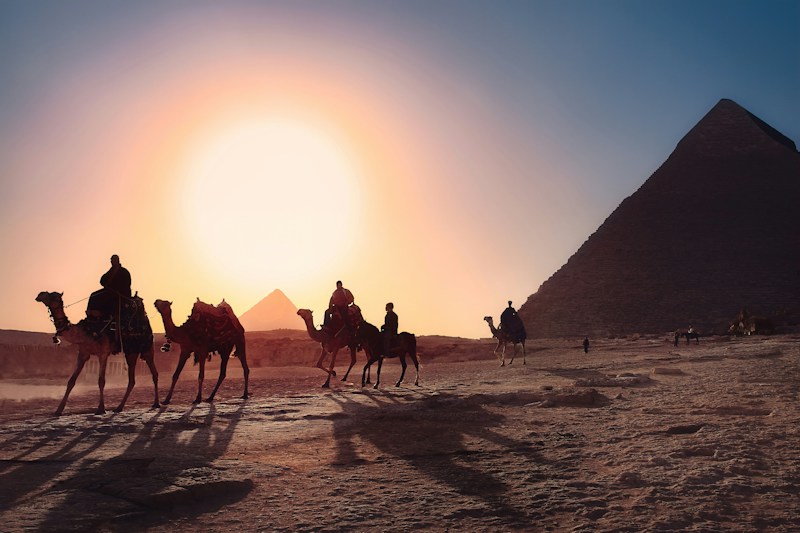
Living with the Nile: How Egypt's Great River Still Shapes Daily Life
The ancient Greek historian Herodotus wrote that Egypt is the gift of the Nile. Five thousand years later, the statement remains accurate. Without the Nile, the territory that is modern Egypt would be almost entirely desert. The river does not just flow through Egypt — it defines where Egyptians can live, farm, and build. The Nile Valley and the Nile Delta together account for less than five percent of Egypt's total land area. Over ninety-five percent of the country's one hundred million people live within that narrow corridor. Satellite images of Egypt at night show a thin ribbon of light — the inhabited, electrified Nile corridor — surrounded by absolute darkness. For millennia, Egyptian farmers depended on the Nile's annual flood. Every summer, rainfall in the Ethiopian highlands would cause the river to rise and overflow its banks, depositing rich black silt across the floodplain. The Egyptians called this silt kemet — black land — and distinguished it sharply from deshret, the red dead desert that surrounded it. The annual flood was not a disaster. It was the agricultural calendar. The Aswan High Dam, completed in 1970, ended the natural flooding cycle. The dam controls the river's flow, generates electricity, and prevents drought-year crop failures. But it also stopped the silt deposit that made the delta soil so extraordinarily fertile. Egyptian farmers now use artificial fertilisers where the Nile once provided everything for free. The river remains Egypt's lifeline — economically, historically, culturally. Egyptians still orient directions toward the Nile. In Cairo, you are either on the eastern bank or the western bank. The river is not background. It is the reference point around which everything else is arranged.
Read full article →